
Are Olympus cameras good?
Olympus cameras have an average overall score of [shortcode-07951872188608111136023949531891357987852790754571], ranking #[shortcode-05773657929415946863156630362450116187392228401834] among comparable camera brands, and a user rating of [shortcode-01062920592754653972159748730781844345202612163100], placing them at #[shortcode-01235665933358502441079134669687501136451197475614] based on user reviews.
Yes, Olympus cameras are especially good for travel, hiking, macro, wildlife, and outdoor photography because they combine compact Micro Four Thirds lenses with excellent stabilization and durable bodies. A 40–150 mm lens gives an 80–300 mm-equivalent field of view, while a 300 mm reaches 600 mm equivalent, allowing a much smaller carried system than many full-frame combinations. OM-D E-M1/E-M5 bodies and their OM System successors also pair well with weather-sealed M.Zuiko lenses.
Their other strength is computational photography. Depending on the model, features include Pro Capture for buffering frames before the shutter is fully pressed, Live Composite for building long exposures, Live ND, focus bracketing and stacking, tripod or handheld high-resolution modes, and effective sensor-shift stabilization. These tools solve real field problems for birds, insects, waterfalls, night scenes, and landscapes rather than merely adding automatic scene presets.
Generation matters. Older Olympus bodies can have contrast-detection autofocus that is adequate for static subjects but less dependable for birds in flight or erratic movement, while E-M1-series and current OM-1/OM-3 bodies provide phase detection and more advanced subject recognition. The smaller sensor also gives less high-ISO headroom and shallower-depth-of-field control than full frame at equivalent framing, so the system is excellent when portability and reach matter, not universally superior.
What are the main advantages of Olympus cameras?
The main advantages of Olympus cameras are as follows:
- Compact Micro Four Thirds system: The 2× field-of-view crop provides substantial telephoto reach from relatively small lenses, which benefits wildlife, travel, and macro kits. Body size alone does not tell the whole story, but an E-M5/OM-5 or E-M1/OM-1 with compact zooms is usually easier to carry than an equivalent full-frame focal-range kit.
- Strong in-body stabilization: Olympus made sensor-shift stabilization a defining system feature, and higher-tier bodies can coordinate with selected stabilized lenses through Sync IS. This supports slower handheld shutter speeds, steadier video, and computational modes, although stabilization cannot freeze subject movement.
- Computational photography: Pro Capture, Live Composite, Live ND, focus stacking, high-resolution modes, and star-oriented autofocus on selected generations reduce the need for accessories or extensive post-processing. Availability and restrictions vary, so the exact model and lens compatibility still need checking.
- Weather-oriented design: E-M1, E-M5, OM-1, OM-3, and OM-5-class bodies are designed around outdoor portability, with sealing on appropriate body-and-lens combinations. Tough TG cameras extend that philosophy to waterproof, shock-resistant fixed-lens use for snorkeling, construction, and rough travel.
- Broad lens and macro ecosystem: Micro Four Thirds gives access to compact Olympus/OM System lenses plus compatible Panasonic and third-party options. M.Zuiko macro lenses, close-focus modes, focus bracketing, and the 2× crop make the system particularly efficient for insects, plants, product details, and field documentation.
What are the main disadvantages of Olympus cameras?
The main disadvantages of Olympus cameras are as follows:
- Smaller sensor at high ISO: Micro Four Thirds has roughly one-quarter the area of full frame, so comparable-generation full-frame cameras usually retain cleaner shadows and color at very high ISO. Excellent stabilization helps static scenes, but it cannot lower ISO when the subject itself requires a fast shutter.
- Less extreme shallow depth of field: The 2× crop helps reach but makes very blurred backgrounds harder at the same framing and f-number. A 25 mm f/1.2 lens frames like 50 mm on full frame yet does not reproduce the depth of field of a 50 mm f/1.2 full-frame setup.
- Autofocus varies sharply by generation: Older E-M10, PEN, and some E-M5 bodies rely heavily on contrast detection and are less dependable for birds in flight or erratic action. E-M1 generations and current OM-1/OM-3 cameras add phase detection and subject recognition, so the Olympus badge alone says little about tracking performance.
- Video depth is inconsistent: Some models provide strong stabilization and useful 4K, while others have older codecs, limited frame rates, greater rolling shutter, no headphone output, or fewer professional monitoring tools. Panasonic Micro Four Thirds cameras often offer a deeper video workflow at the same broad system size.
- Branding and support require attention: Current development belongs to OM Digital Solutions and new cameras increasingly use OM System branding, while many Olympus-labelled bodies and batteries belong to earlier generations. Check current firmware, service, battery compatibility, accessory supply, and whether a feature exists on the specific Olympus or OM System generation.
Who makes Olympus cameras?
Olympus-branded cameras were developed by Olympus Corporation, the Japanese optical and medical-technology company founded in 1919. Olympus built a long camera history through models such as the PEN half-frame series, OM film SLRs, Four Thirds digital E-System, Micro Four Thirds PEN and OM-D lines, and Tough waterproof compacts.
The modern camera business changed ownership structure in 2021. Olympus transferred its imaging operation to a new company backed by Japan Industrial Partners, creating OM Digital Solutions Corporation. OM Digital Solutions took over camera and audio development, support, and the M.Zuiko lens business, while Olympus Corporation continued primarily as a medical-technology company rather than the operator of the consumer camera division.
OM Digital Solutions introduced OM System as the forward-looking brand, so current products such as the OM-1, OM-3, OM-5, and TG-7 increasingly carry OM System rather than Olympus on the body. The engineering lineage, Micro Four Thirds mount, lenses, and many product concepts continue from Olympus, but a new camera sold today may legally and commercially be an OM Digital Solutions product even when buyers still call the system Olympus.
What are the main Olympus camera models?
The main Olympus and current OM System camera families are as follows:
- OM-1 and OM-D E-M1: The E-M1 line was Olympus's rugged professional Micro Four Thirds family, with phase-detection autofocus, weather sealing, strong stabilization, high bursts, and computational modes for nature and action. OM System's OM-1 generations continue that role with newer stacked-sensor readout, subject recognition, improved viewfinders, and deeper computational features.
- OM-3: The OM-3 brings high-end OM-1-class processing and computational photography into a smaller, classically styled body. It targets travel, street, landscape, and enthusiast users who want advanced stabilization, subject detection, Live ND/GND-style tools, and strong speed without the OM-1's larger integrated-grip design.
- OM-5 and OM-D E-M5: The E-M5 family established the compact weather-sealed enthusiast concept, balancing portability, stabilization, and serious controls below the E-M1 tier. Current OM-5 generations continue that hiking and travel role, with computational features and sealing in a smaller body, though autofocus, ports, batteries, and video depend on generation.
- OM-D E-M10: E-M10 models are the accessible viewfinder-equipped Micro Four Thirds line, including the E-M10 Mark IV. They offer compact bodies, stabilization, touchscreens, and interchangeable lenses for learning and travel, but normally omit the strongest sealing, phase-detection action autofocus, and professional controls of higher tiers.
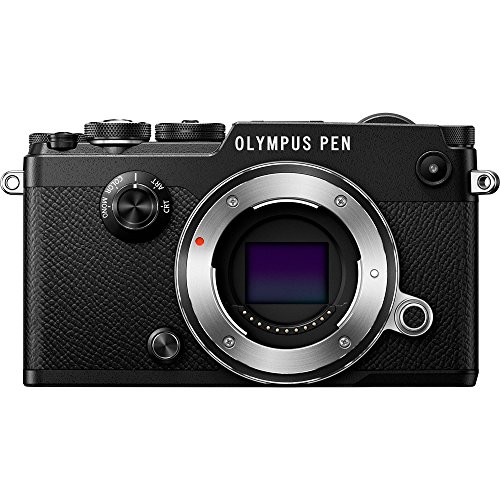
- PEN E-P and E-PL: PEN digital cameras emphasize compact rangefinder-style bodies, simple touch operation, and small lenses, with models such as the E-P7 and E-PL10. Most omit a built-in electronic viewfinder and are aimed at travel, family, street, and lifestyle photography rather than demanding wildlife or harsh-weather work.
- Tough TG series: TG-5, TG-6, and current TG-7-style cameras use fixed lenses and small sensors in waterproof, shock-resistant bodies with strong close-focus and microscope modes. They are designed for snorkeling, climbing, construction, field notes, and conditions where an interchangeable-lens camera would need a housing or greater protection.
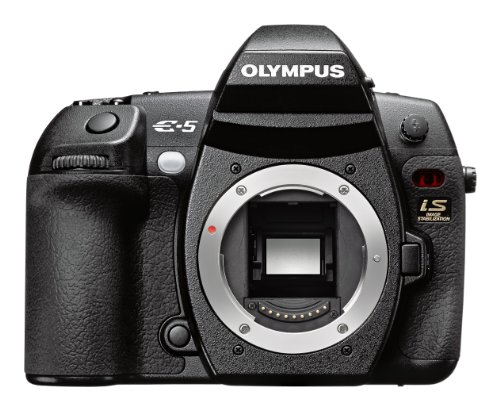
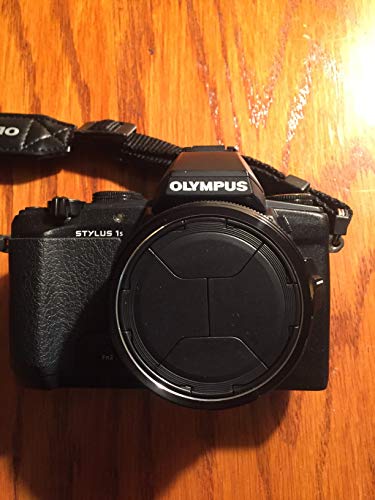
- Four Thirds E-System and earlier compacts: Cameras such as the E-5, E-30, E-620, Stylus, XZ, SP, SZ, and VG families document Olympus's pre-OM-D digital history. They use older mounts or fixed lenses and should not be confused with the current Micro Four Thirds upgrade path, even when their controls or styling influenced later products.
How much do Olympus cameras cost?
Current new Olympus-lineage cameras sold under Olympus or OM System branding generally cost about £470-£2,200 for the body or basic kit. The historical Olympus catalogue includes many inexpensive discontinued compacts and early OM-D/PEN generations, so those legacy prices do not represent the current OM Digital Solutions range.
At the entry and fixed-lens end, a Tough TG-7-class camera is typically around £400-£500, while an E-M10 Mark IV or PEN E-P7 kit can occupy roughly the £600-£900 tier where normally stocked. These models prioritize portability and straightforward operation; weather sealing, viewfinders, phase-detection autofocus, and advanced computational modes differ substantially.
An OM-5-class body or kit generally falls around £1,000-£1,400, while the OM-3 is around the £1,700 tier and an OM-1 Mark II-class body around £1,900-£2,200. The higher prices pay for stronger processors, subject detection, phase-detection autofocus, sealing, viewfinders, buffers, ports, and computational features rather than a larger sensor.
Micro Four Thirds lenses range from compact primes and consumer zooms around £220-£600 to weather-sealed PRO zooms and telephotos around £900-£2,600 or more. Wildlife and macro users should also budget for extra batteries, high-speed cards, teleconverters, flashes, diffusers, tripods, and weather-compatible accessories; the body's portability advantage is greatest when the full lens kit is chosen with the same goal.
How do Olympus cameras compare with Panasonic models?
Olympus and current OM System cameras are generally stronger for compact stills kits, weather-oriented outdoor use, and computational photography, while Panasonic often offers deeper video tools and a broader range of body styles. Within Micro Four Thirds, both brands share the same basic mount, so many Olympus/OM System, Panasonic, Sigma, and other lenses can be used across bodies.
OM System's strengths are highly effective stabilization, compact weather-sealed bodies, Pro Capture, Live Composite, Live ND/GND-style tools, focus stacking, and nature-oriented subject detection on newer models. Panasonic's GH and G-series cameras have traditionally emphasized codecs, frame rates, monitoring, cooling, anamorphic support, and creator controls; recent phase-detection models such as the G9 II and GH7 also reduce the older autofocus gap.
Cross-brand lens use works, but not every feature transfers fully. Basic aperture, focus, and optical stabilization generally work with compatible Micro Four Thirds lenses, while the most advanced coordinated stabilization, function buttons, firmware behavior, focus transitions, or correction profiles may be optimized within one brand. A Panasonic lens on an OM body or M.Zuiko lens on a Panasonic body should therefore be checked for the exact stabilization and video behavior required.
Choose Olympus/OM System for hiking, travel, macro, wildlife, weather sealing, stabilized handheld stills, and computational field tools. Choose Panasonic when video recording formats, monitoring, cooling, or hybrid production features dominate. Panasonic also sells full-frame L-mount cameras, but those are a separate lens and sensor system and should not be compared with Micro Four Thirds Olympus bodies as if they shared the same mount.
What should you consider while choosing the best Olympus camera?
Consider the following points while choosing an Olympus or OM System camera:
- Confirm the brand generation: Olympus Corporation developed Olympus-labelled cameras, while current development belongs to OM Digital Solutions under OM System branding. Check whether the model is an Olympus OM-D/PEN/Tough generation or a current OM System OM/TG product, then verify firmware, service, warranty, batteries, and accessories accordingly.
- Verify the mount: OM-D, PEN, OM-1, OM-3, and OM-5 families use Micro Four Thirds, while older E-System DSLRs use the larger Four Thirds mount and Tough/compact cameras have fixed lenses. Four Thirds DSLR lenses need an adapter on Micro Four Thirds bodies and may not focus like native modern lenses.
- Understand the 2× crop: A 12–40 mm lens frames like 24–80 mm on full frame, while 300 mm frames like 600 mm. This helps telephoto and macro portability but makes ultra-shallow depth of field harder; compare equivalent framing and aperture effect rather than focal length alone.
- Check stabilization and Sync IS: Most interchangeable-lens Olympus bodies include IBIS, but rated performance and video behavior vary. Selected stabilized M.Zuiko lenses coordinate with compatible bodies through Sync IS, while cross-brand Panasonic lens stabilization may not provide the same coordinated result.
- Match autofocus generation to movement: Contrast-detection E-M10/PEN generations can be excellent for static subjects but weaker for irregular action. E-M1 generations and current OM-1/OM-3 bodies add phase detection and more advanced subject recognition; verify supported animals or vehicles, AF coverage, burst rate, and buffer in the intended mode.
- Inspect computational modes carefully: Pro Capture, Live Composite, Live ND, graduated-ND simulation, focus stacking, handheld high-resolution capture, and star autofocus are model-specific and can restrict RAW format, lenses, apertures, shutter speeds, or subject movement. Confirm the exact mode dependencies instead of assuming every OM-D body supports the same tools.
- Compare weather sealing as a complete kit: A sealed body needs a sealed lens and correctly closed doors to form a weather-resistant system. Check the model's rating, operating temperature, lens sealing, battery-door design, and whether rain protection is still sensible for prolonged exposure.
- Evaluate video by generation: Compare 4K frame rates, crop, rolling shutter, autofocus, stabilization, microphone and headphone ports, Log profiles, recording limits, and HDMI behavior. Strong IBIS can make handheld video smooth, but it does not replace modern codecs, cooling, audio monitoring, or reliable moving-subject AF.
- Build the lens kit around the size advantage: Compact primes and zooms preserve the reason to choose Micro Four Thirds, while large f/1.2 PRO lenses or super-telephotos can make a small body front-heavy. Price the complete travel, wildlife, or macro kit and check teleconverter, tripod collar, flash, and diffuser compatibility.
- Separate Tough cameras from interchangeable-lens bodies: A TG-series camera is waterproof and close-focus oriented with a fixed small-sensor zoom, while OM-D/OM bodies offer larger Micro Four Thirds sensors and changeable lenses but need protection underwater. Choose based on environment first; neither category substitutes completely for the other.