
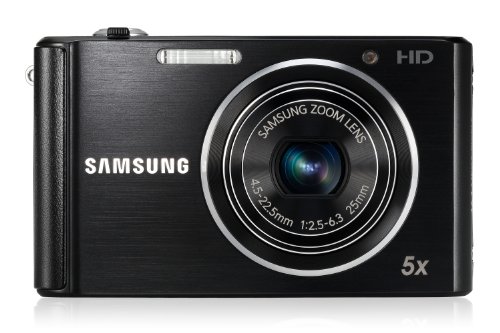
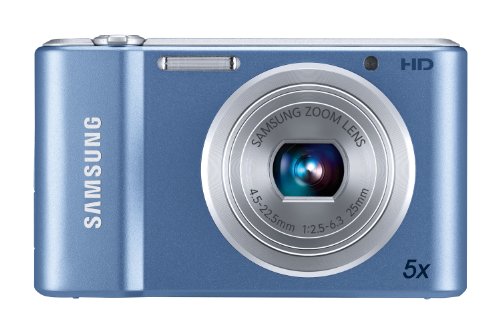
Are Samsung cameras good?
Samsung cameras have an average overall score of [shortcode-15611086749513325992153113503417498029963779326580], ranking #[shortcode-17827693128663281706066949307891737751003054737194] among comparable camera brands, and a user rating of [shortcode-01067160746772539278103299474961207213570776167393], placing them at #[shortcode-04187672096341190107007191385144847614234082956114] based on user reviews.
Yes, some Samsung cameras were technically excellent for their time, but they are only sensible today if the limitations of a discontinued system are acceptable.
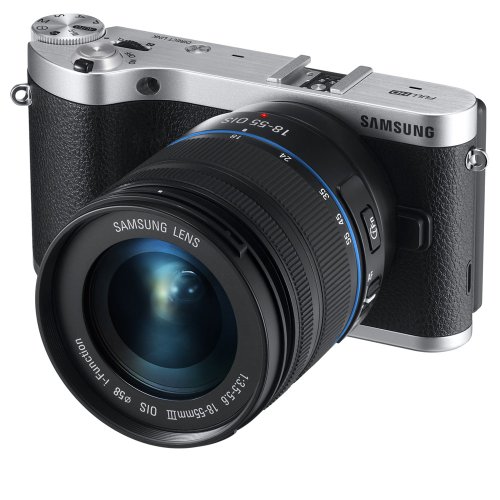
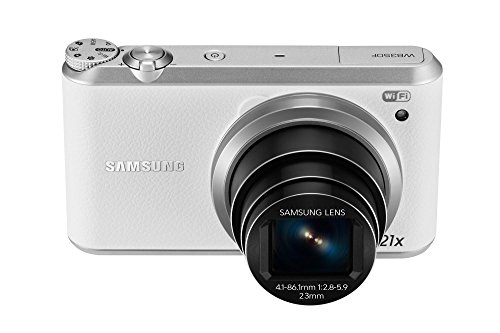
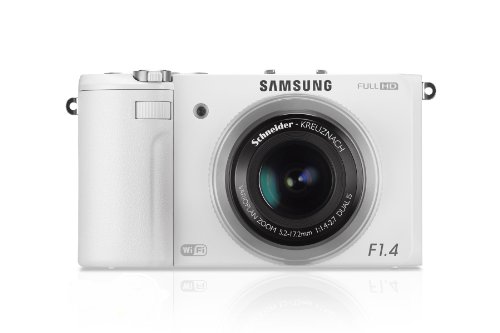
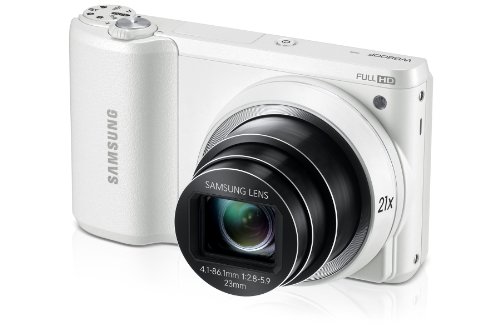
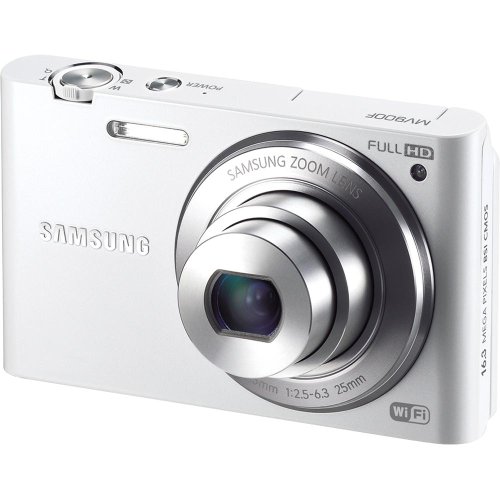
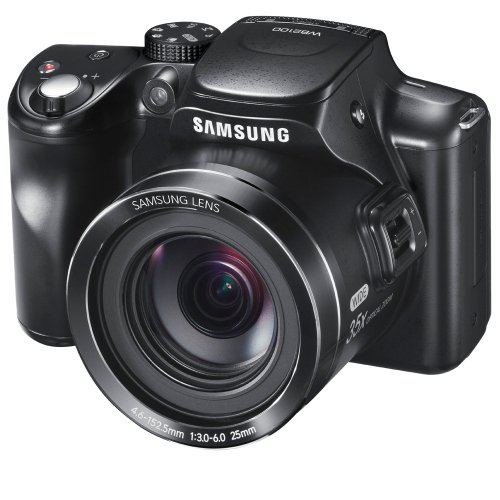
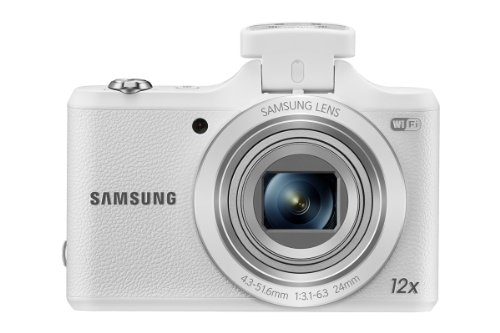
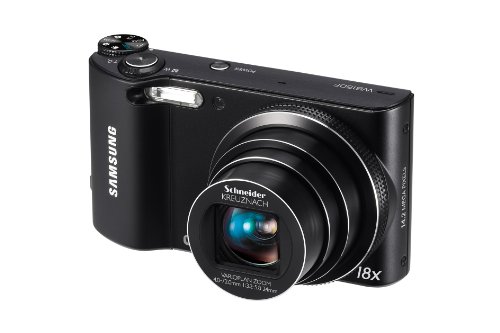
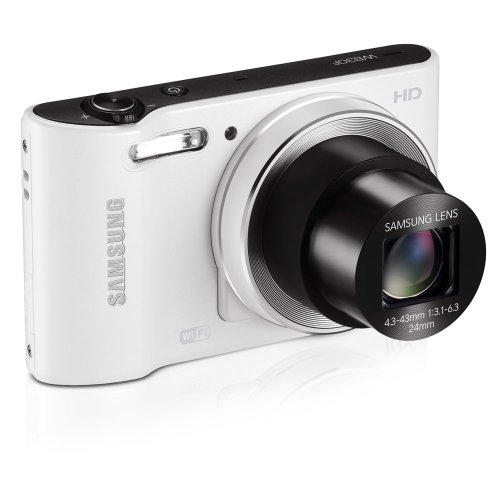
The NX1 was unusually advanced when released, pairing a 28.2 MP APS-C BSI sensor with hybrid autofocus, a burst rate of up to 15 fps, weather-resistant construction, and internal 4K video using H.265/HEVC. The smaller NX500 shared much of the imaging pipeline in a compact body, while models such as the NX30 and NX300 offered good controls, AMOLED screens, and connected features. Samsung also produced the separate one-inch NX Mini system and several Galaxy, WB, EX, ST, DV, and MV fixed-lens cameras.
The problem is not basic image quality; it is continuity. There are no new Samsung camera bodies or NX lenses, NX and NX-M lenses are not mutually compatible, official service and accessory supply are limited, and older Wi-Fi or Android functions may no longer work as originally intended. For a buyer who wants a new camera, manufacturer support, modern subject detection, current 10-bit video, or a lens system that can grow, an active Canon, Nikon, Sony, Fujifilm, Panasonic, or OM System range is the safer choice.
What are the main advantages of Samsung cameras?
The main advantages of Samsung cameras are as follows:
- Advanced APS-C sensor technology: The NX1 and NX500 featured a 28.2 MP backside-illuminated APS-C CMOS sensor at a time when that combination of resolution and readout speed was uncommon. Their files can still provide useful detail and cropping latitude at low and moderate ISO settings.
- Fast flagship performance: The NX1 offered bursts up to 15 fps with on-sensor phase-detection autofocus and a deep, weather-resistant body. That made it unusually capable for action and wildlife in its generation, although current cameras use more sophisticated subject-recognition algorithms.
- Early 4K video: NX1 and NX500 brought 4K recording and H.265/HEVC compression to compact interchangeable-lens cameras early. The codec reduced file size for its quality, but modern editing support, 10-bit capture, log workflows, and rolling-shutter performance should not be assumed.
- Connected controls and displays: Samsung integrated Wi-Fi, NFC, touch interfaces, and high-quality AMOLED screens across much of the NX range. The i-Function lens button also allowed exposure settings to be adjusted from the lens, giving the system a distinctive control method.
- Compact native lenses: The APS-C NX mount included small primes such as the 16 mm, 20 mm, 30 mm, and 45 mm options alongside stabilized zooms and higher-end S-series lenses. The catalogue was never as broad as mature Canon or Sony systems, but several lenses balanced size and image quality well.
What are the main disadvantages of Samsung cameras?
The main disadvantages of Samsung cameras are as follows:
- The camera system is discontinued: Samsung stopped developing dedicated cameras and NX lenses around 2015–2016, leaving no current bodies, firmware roadmap, or official upgrade path. This affects long-term service, replacement parts, batteries, flashes, and compatibility support.
- NX and NX-M are different mounts: Standard Samsung NX cameras use the APS-C NX mount, while the NX Mini uses the smaller one-inch NX-M mount. The lenses are not directly interchangeable, and the limited NX-M catalogue makes that branch especially restrictive.
- Native lens choice is permanently fixed: No new autofocus NX lenses are being developed, and adapting NX lenses to current mirrorless mounts is difficult because of flange distance and electronic aperture and focus control. A lens investment therefore cannot move naturally into a modern Samsung successor body.
- Autofocus and stabilization are dated: The NX1 and NX500 had hybrid phase-detection systems, but they lack current human, animal, bird, and vehicle recognition. Samsung bodies also generally rely on optical stabilization in selected lenses rather than in-body image stabilization, so unstabilized primes receive no sensor-shift correction.
- Video and connectivity have aged: H.265 support is now common, but NX video is primarily an older 8-bit workflow without the internal 10-bit, log, open-gate, and high-frame-rate options expected from modern hybrids. Mobile apps, Android services, wireless sharing, and remote-control features may also depend on software or network support that is no longer maintained.
Who makes Samsung cameras?
Samsung cameras were made by Samsung Electronics, the South Korean technology company headquartered in Suwon. Samsung Electronics was established in 1969 as part of the wider Samsung Group, whose origins go back to 1938. The company is now best known for semiconductors, displays, televisions, appliances, and Galaxy mobile devices rather than dedicated photographic cameras.
Samsung's camera activity included compact digital models, co-developed DSLR-era products, and eventually its own mirrorless systems. In the 2000s, Samsung sold GX-series DSLRs based closely on Pentax designs. It then introduced the Samsung NX mirrorless platform, with the APS-C NX10 reaching the market in 2010 and establishing a native electronic NX lens mount.
The range culminated in products such as the NX1, NX500, Galaxy NX, and a catalogue of NX lenses, while the smaller NX Mini featured a separate one-inch NX-M mount. Samsung also produced Android-based Galaxy Camera models and numerous WB, ST, DV, MV, and EX fixed-lens cameras. The company withdrew from the dedicated-camera market across major regions around 2015–2016 and has not launched a successor interchangeable-lens system, although Samsung image sensors and mobile-camera technology remain important in smartphones.
What are the main Samsung camera models?
The main Samsung camera models and families are as follows:
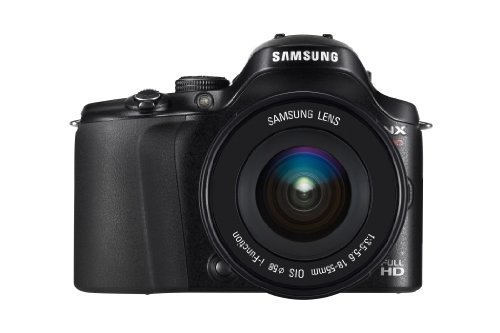
- NX1 and NX500: The NX1 is the professional-style APS-C flagship, with a 28.2 MP BSI sensor, hybrid autofocus, up to 15 fps shooting, an electronic viewfinder, weather-resistant construction, and internal 4K HEVC video. The NX500 places similar sensor and video technology in a much smaller body but omits the built-in viewfinder and has tighter handling and recording limitations.
- NX10, NX20, and NX30 families: These DSLR-shaped APS-C NX bodies combine electronic viewfinders with articulated or tilting AMOLED displays and direct controls. The NX30 is the most developed of the group, but its autofocus, burst depth, and video specifications remain well behind the later NX1.
- NX100, NX200, NX300, and entry NX models: Rangefinder-style bodies such as the NX300 favor compact size and touch control, while NX1000, NX1100, NX2000, and NX3000 models target simpler connected photography. Capabilities vary widely by generation, so Wi-Fi, viewfinder provision, hybrid autofocus, screen movement, and video resolution must be checked on the exact model.
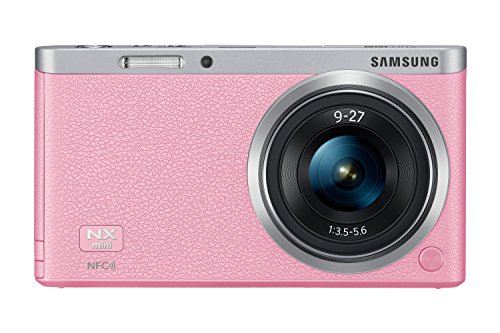
- NX Mini and Galaxy NX: The NX Mini uses a 20.5 MP one-inch sensor and the separate NX-M lens mount, making it smaller but incompatible with ordinary APS-C NX lenses without a dedicated adapter. Galaxy NX instead uses the standard APS-C NX mount in a large Android-powered body with mobile-data and app features, although its software platform is now obsolete.
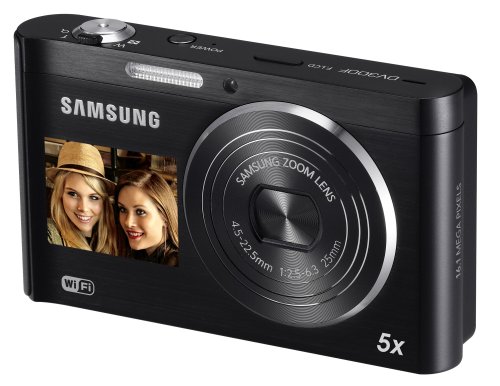
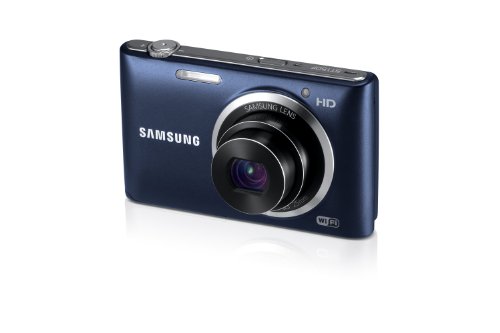
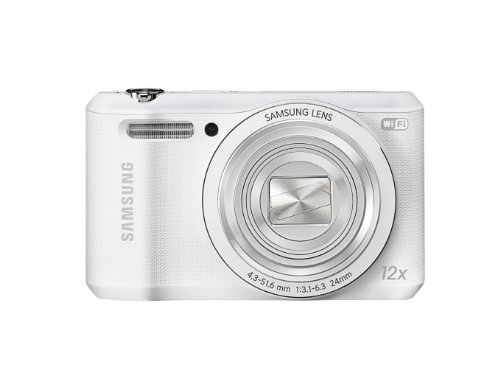
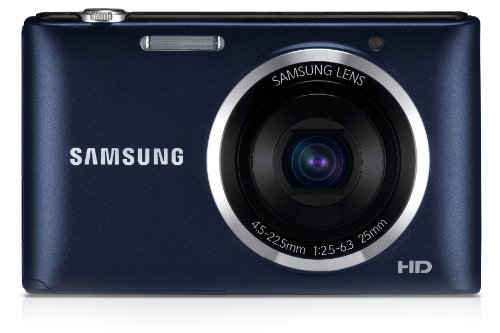
- Galaxy Camera, WB, EX, ST, DV, and MV compacts: Galaxy Camera models combine Android with a small sensor and long built-in zoom, while WB cameras emphasize travel-zoom or bridge-camera reach. EX models were premium compacts, and ST, DV, and MV lines explored slim bodies, front-facing displays, or unusual hinged screens rather than interchangeable lenses.
How much do Samsung cameras cost?
Samsung does not sell a current dedicated camera in 2026, so there is no meaningful new-product price range or official current MSRP for Samsung NX, NX Mini, Galaxy Camera, or the older compact families.
Any unopened units still listed by individual retailers are residual legacy inventory rather than part of a supported entry, midrange, and flagship catalogue. Their prices can vary independently of specification, and Samsung no longer provides a current body-and-lens roadmap against which those listings can be evaluated.
If the requirement is a genuinely new camera with a manufacturer warranty, current firmware, available lenses, and an upgrade path, Samsung has no price tier to compare. Budget instead against an active system from Canon, Nikon, Sony, Fujifilm, Panasonic, or OM System, including the required lens rather than treating an old Samsung list price as a present-day market benchmark.
How do Samsung cameras compare with Canon models?
Current Canon cameras are the much safer choice than Samsung cameras because Canon still develops bodies, RF and RF-S lenses, firmware, accessories, and service support; Samsung's dedicated-camera systems have been discontinued for roughly a decade.
At their historical peak, Samsung models were genuinely competitive. The NX1 offered a 28.2 MP APS-C BSI sensor, up to 15 fps shooting, hybrid autofocus, and internal 4K HEVC video, while Canon's mirrorless range was still developing. Samsung also pushed Wi-Fi, AMOLED touchscreens, and connected Android concepts earlier and more aggressively than many traditional camera brands.
The position is reversed for a buyer in 2026. Canon's current EOS R cameras provide modern Dual Pixel CMOS AF with human and animal subject detection, current video formats, supported batteries and flashes, and an expanding RF lens system. EF and EF-S lenses can also be adapted to compatible EOS R bodies with maintained electronic aperture, stabilization, and autofocus support. Samsung NX has a permanently fixed native-lens catalogue and no successor body that accepts NX lenses.
Samsung can still be interesting as photographic technology from a particularly inventive period, but it cannot match Canon as a current system purchase. Choose Canon for new equipment, dependable autofocus, service, lens growth, and future body upgrades. A Samsung comparison only makes sense when the buyer deliberately accepts a legacy platform and does not expect modern support or continuity.
What should you consider while choosing the best Samsung camera?
Consider the following points while choosing a Samsung camera:
- Current-system status: Samsung no longer manufactures dedicated cameras or develops NX lenses, so begin by deciding whether a discontinued platform is acceptable at all. There is no current Samsung body to upgrade to, no official 2026 model range, and no supported new-product price ladder.
- NX versus NX-M mount: Standard NX bodies use an APS-C sensor and the Samsung NX mount, while the NX Mini uses a one-inch sensor and the smaller NX-M mount. The two lens families are not directly interchangeable, and NX-M has far fewer native options.
- Model generation and sensor: NX1 and NX500 use the 28.2 MP APS-C BSI sensor, whereas earlier NX models use older 20 MP-class APS-C designs with slower readout and different high-ISO behavior. NX Mini, Galaxy Camera, and fixed-lens compacts use smaller sensors, so resolution alone does not predict low-light image quality or depth-of-field control.
- Autofocus and burst performance: The NX1 is the strongest Samsung action body, with hybrid on-sensor autofocus and bursts up to 15 fps, while NX500 and NX300-generation models have different phase-detection coverage and buffer limits. Earlier contrast-detect NX and compact cameras are much less suitable for erratic action than modern subject-detection systems.
- Stabilization: Samsung NX bodies generally do not provide in-body image stabilization and instead depend on OIS in selected lenses. Check the exact lens designation, because an unstabilized prime receives no sensor-shift correction and digital video stabilization is not equivalent to optical or in-body stabilization.
- Video format and workflow: NX1 and NX500 record 4K with H.265/HEVC, but the implementation is an older 8-bit workflow and can show substantial rolling shutter or mode-specific crops. Confirm that the editing software can decode the files efficiently and do not expect internal 10-bit, modern log profiles, open-gate capture, or current RAW-video support.
- Lens and accessory availability: Identify every focal length needed before committing, because the native NX and NX-M catalogues will not expand. Also confirm availability of the correct battery, charger, flash, remote, and microphone accessories; similar Samsung model names do not guarantee that these parts are shared.
- Connectivity and software: Wi-Fi, NFC, Android apps, cloud upload, and remote-control features were major Samsung selling points, but some depend on discontinued mobile apps, old Android versions, or services that have changed. Treat core photographic controls and local file transfer as more dependable than the original connected-camera promises.
- Fixed-lens camera specifications: For Galaxy Camera, WB, EX, ST, DV, or MV models, check sensor size, equivalent zoom range, maximum aperture, viewfinder provision, and RAW support. A long zoom or Android interface does not offset the low-light limits of a small sensor, and the built-in lens cannot be replaced later.