
Are Canon bridge cameras good?
Canon bridge cameras have an average overall score of [shortcode-03108701509445785481112953555971025314524206226730], ranking #[shortcode-09220306517968753433116930936268492399963619123951] among comparable camera brands, and a user rating of [shortcode-03569724327853470369068573353633093733693852824284], placing them at #[shortcode-17444167157572329128107635479071824320542493381453] based on user reviews.
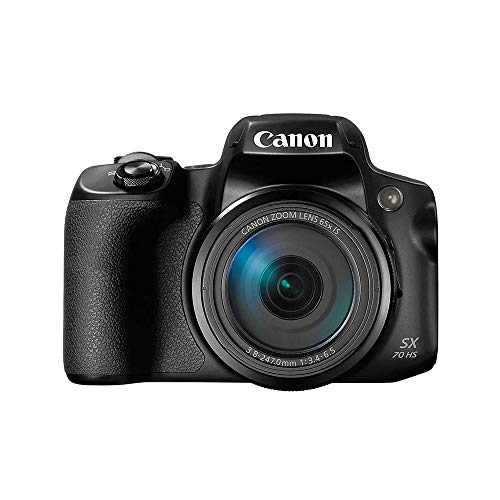
Yes, Canon bridge cameras are good when extreme optical zoom and an all-in-one body matter more than large-sensor image quality or interchangeable lenses. The PowerShot SX70 HS combines a 65× zoom covering roughly 21–1,365 mm equivalent, an electronic viewfinder, a fully articulating screen, optical stabilization, RAW capture, and 4K video. That range is useful for travel, distant wildlife, aircraft, the moon, and daylight sport without carrying multiple telephoto lenses.
The compromise is the small 1/2.3-inch-type sensor and a lens that becomes relatively slow toward the telephoto end. In bright light, the SX70 can produce detailed results and frame subjects a phone cannot reach; in dim light, higher ISO, slower shutter speeds, atmospheric haze, and focus difficulty reduce the practical benefit of the maximum zoom. Background separation is also much weaker than with an APS-C camera and a bright telephoto lens.
Canon's bridge range is now limited, so generation matters. Older SX models may have shorter zooms, lower-resolution viewfinders, slower processors, weaker video, or simpler autofocus, while the G3 X uses a larger 1-inch-type sensor and shorter 25× zoom but lacks the current availability of a mainstream line. A Canon bridge camera is therefore best as a deliberate reach-first tool, not as a general replacement for a modern mirrorless camera.
What are the main Canon bridge camera series?
The main Canon bridge series and models are as follows:
- PowerShot SX70 HS: This is the most relevant Canon bridge camera for a current new purchase, combining a 65× 21–1,365 mm-equivalent zoom with a 1/2.3-inch-type sensor, electronic viewfinder, articulating screen, RAW files, and 4K video. It suits daylight travel and distant subjects, but its f/3.4–6.5 lens and small sensor limit low-light quality and shallow depth of field.
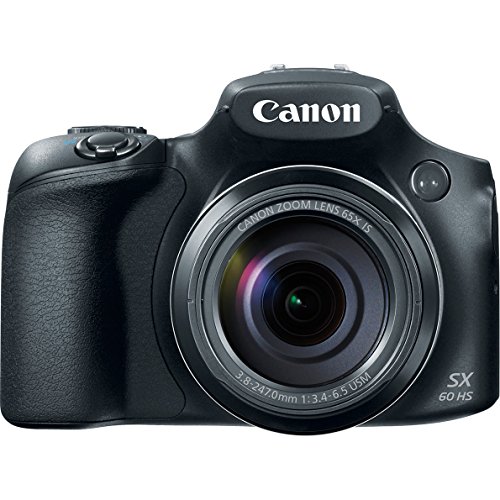
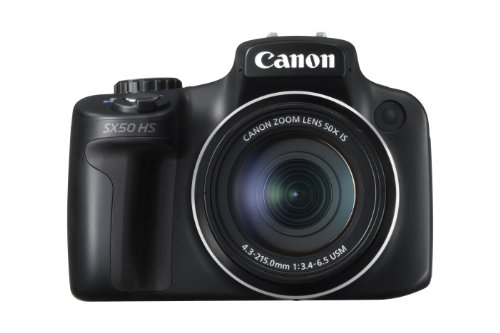
- PowerShot SX60 HS and SX50 HS: These earlier enthusiast superzooms established the long-zoom, viewfinder-equipped PowerShot bridge format before the SX70. The SX60 reaches 65× and the SX50 50×, but their older processors, autofocus, displays, video modes, and connectivity make them generation-specific choices rather than equivalents to the current model.
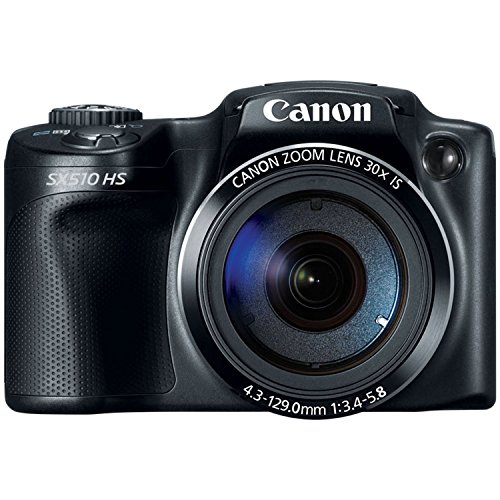
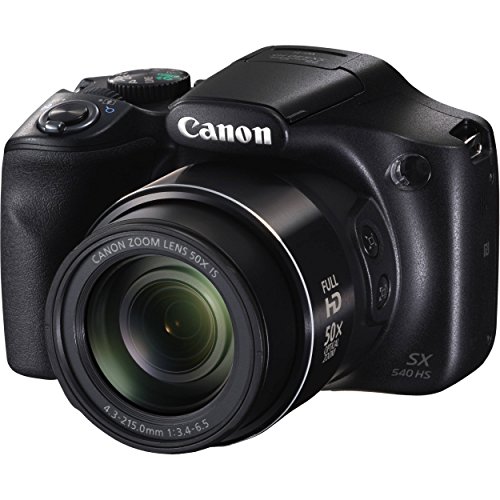
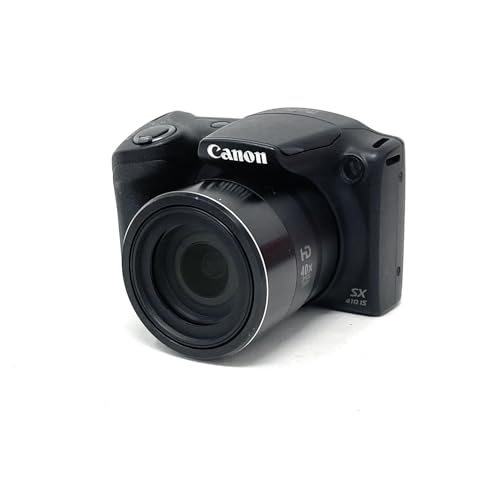
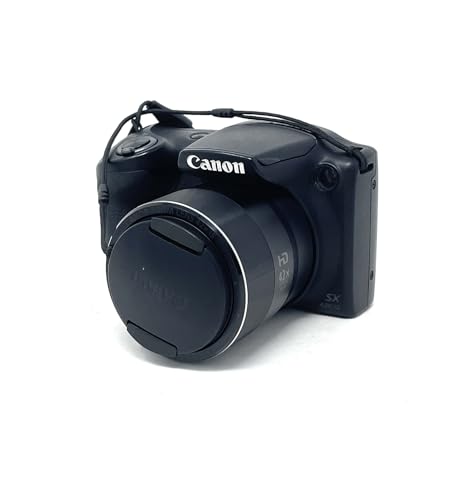
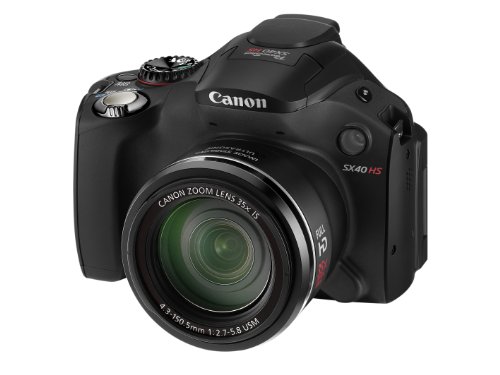
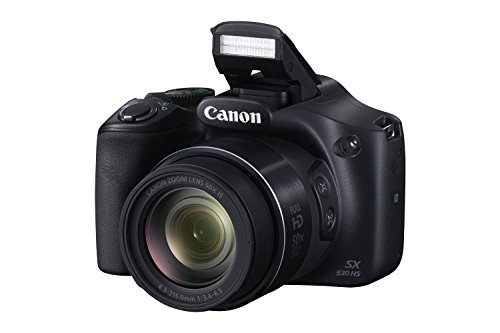
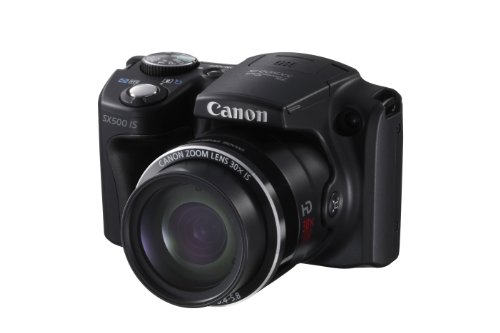
- PowerShot SX4xx and SX5xx families: Models such as the SX420 IS, SX410 IS, SX500 IS, SX510 HS, SX530 HS, and SX540 HS offer substantial fixed-lens zoom in simpler, lower-cost bodies. Several omit the higher-grade viewfinder, RAW, control, or video features associated with the SX60/SX70 tier, so their DSLR-like shape should not be mistaken for enthusiast-level operation.
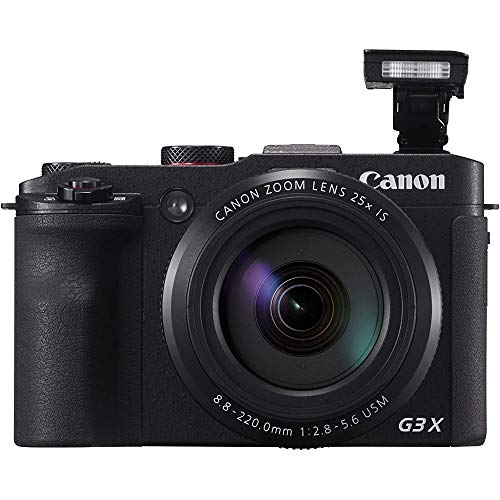
- PowerShot G3 X: The G3 X takes a different premium-bridge approach with a larger 1-inch-type sensor and a 25× 24–600 mm-equivalent lens. It provides better image-quality potential than the small-sensor SX superzooms and a useful microphone input, but its shorter reach, optional rather than integrated viewfinder, and discontinued status make it a distinct historical branch rather than Canon's current superzoom line.
How much do Canon bridge cameras cost?
A current new Canon bridge camera generally costs about £500-£700, with the PowerShot SX70 HS representing the main normally recognizable retail option. Canon no longer has a broad new bridge range across multiple price tiers, so historical SX and G3 X prices should not be treated as a current market distribution.
The SX70 HS price pays for its integrated 65× zoom, electronic viewfinder, articulating screen, optical stabilization, RAW support, and 4K recording. At roughly £500-£700, compare it with a small EOS R kit: the bridge camera includes extreme telephoto reach immediately, while the mirrorless kit offers a much larger sensor and a longer-term lens path but needs an expensive telephoto lens to approach the same framing.
There is no separate lens purchase, but budget for a spare battery, high-speed memory card, protective bag, lens filter or hood where supported, and a stable tripod or monopod for long-range work. These accessories can add around £100-£300, and a microphone adds more if the model and intended video workflow support external audio. Confirm normal new supply, Canon warranty, and battery availability before treating an older SX or G3 X listing as equivalent to the SX70 HS.
How do Canon bridge cameras compare with Nikon bridge models?
Canon bridge cameras are generally lighter and easier to travel with, while Nikon bridge models offer substantially more maximum reach in their top superzoom tiers. The Canon SX70 HS uses a 65× 21–1,365 mm-equivalent lens and weighs about 610 g; Nikon's P950 reaches roughly 2,000 mm equivalent and weighs about 1,000 g, while the P1000 extends to roughly 3,000 mm and weighs about 1,400 g.
That size difference changes the shooting experience. The SX70 HS is easier to carry all day and offers a genuinely wide 21 mm-equivalent starting point for landscapes and interiors, yet its 1,365 mm-equivalent telephoto end is shorter for small distant birds, aircraft, or the moon. Nikon's P950 and P1000 provide greater framing reach and larger grips, but they demand steadier support and occupy much more bag space.
Image quality is not decided by zoom length alone. These superzoom models use small sensors, so bright light, optical stabilization, focus accuracy, shutter speed, and atmospheric conditions determine how much detail survives at the long end. Nikon's longer lens can frame a distant subject more tightly, but Canon's lower weight can make it easier to position and use spontaneously; neither substitutes for the high-ISO quality and subject isolation of an APS-C camera with a suitable telephoto lens.
Choose Canon when portability, the 21 mm wide end, articulating screen, familiar Canon controls, and 65× reach are the better balance. Choose Nikon when maximum telephoto framing outweighs weight and size. Because both brands' bridge ranges contain older generations, compare the exact viewfinder, RAW support, autofocus, 4K modes, external audio, battery, and current new availability rather than relying on zoom ratio alone.
What should you consider while choosing the best Canon bridge camera?
Consider the following points while choosing a Canon bridge camera:
- Confirm current availability and generation: Canon's bridge range is now centered on the SX70 HS rather than a broad ladder of new models. Verify the exact SX number, Canon support page, warranty, firmware, battery, and normal retail supply, because an older SX or G3 X listing may have very different features and support context.
- Check the real focal range: The SX70 HS covers roughly 21–1,365 mm equivalent, combining a genuinely wide starting point with extreme telephoto reach. Compare equivalent millimetres rather than zoom ratio alone, because a 65× lens starting wider can end shorter than another brand's lens with a different starting focal length.
- Understand the small sensor: A 1/2.3-inch-type sensor enables the compact 65× design but limits high-ISO quality, dynamic range, and shallow depth of field. For distant subjects, bright light and a fast enough shutter are often more important than the nominal megapixel count.
- Read aperture across the zoom: The SX70 HS lens is approximately f/3.4 at wide angle and f/6.5 at telephoto, so it gathers much less light at maximum reach. Expect ISO or shutter-speed compromises in cloud, shade, dusk, and indoor conditions, and do not compare it directly with the aperture of a short premium compact zoom.
- Treat stabilization and support as essential: Optical stabilization helps compose at long focal lengths, but it cannot freeze a moving bird or remove atmospheric shimmer. Check tripod socket position, monopod balance, remote or timer options, and whether stabilization behaves appropriately when the camera is mounted.
- Evaluate the viewfinder and screen: An electronic viewfinder is important for stability and visibility in bright light, while an articulating screen helps with low angles, video, and awkward tripod positions. Compare viewfinder resolution, refresh, eye relief, screen articulation, and whether key settings remain visible during bursts.
- Check autofocus and burst depth together: Bridge cameras generally have less sophisticated subject tracking than current interchangeable-lens bodies. Verify continuous focus, focus-area control, RAW burst length, card-clearing time, and performance near maximum telephoto, where a narrow field of view makes reacquiring a moving subject difficult.
- Inspect RAW and video features: Confirm RAW availability, 4K frame rates, crop, stabilization behavior, microphone input, recording limits, and exposure control. A 4K label does not guarantee strong moving-subject autofocus or low-light video from a small sensor.
- Budget for the complete fixed-lens kit: Include spare batteries, fast cards, a protective bag, lens protection, cleaning tools, tripod or monopod, and external audio if supported. The lens cannot be upgraded later, so make sure its wide end, telephoto reach, aperture, minimum focus distance, and control layout cover the intended work before buying.